Culture · Taipei
Saxony meets Taiwan, on stage
Mu-Yi Chen and Norbert Kegel put dance, ink, and large images on one stage. The world premiere was in Zhongshan Hall’s Zhongzheng Auditorium on 4 September.
BRANDNEWS.TODAY, Feature · 4 September 2026 · 7 min
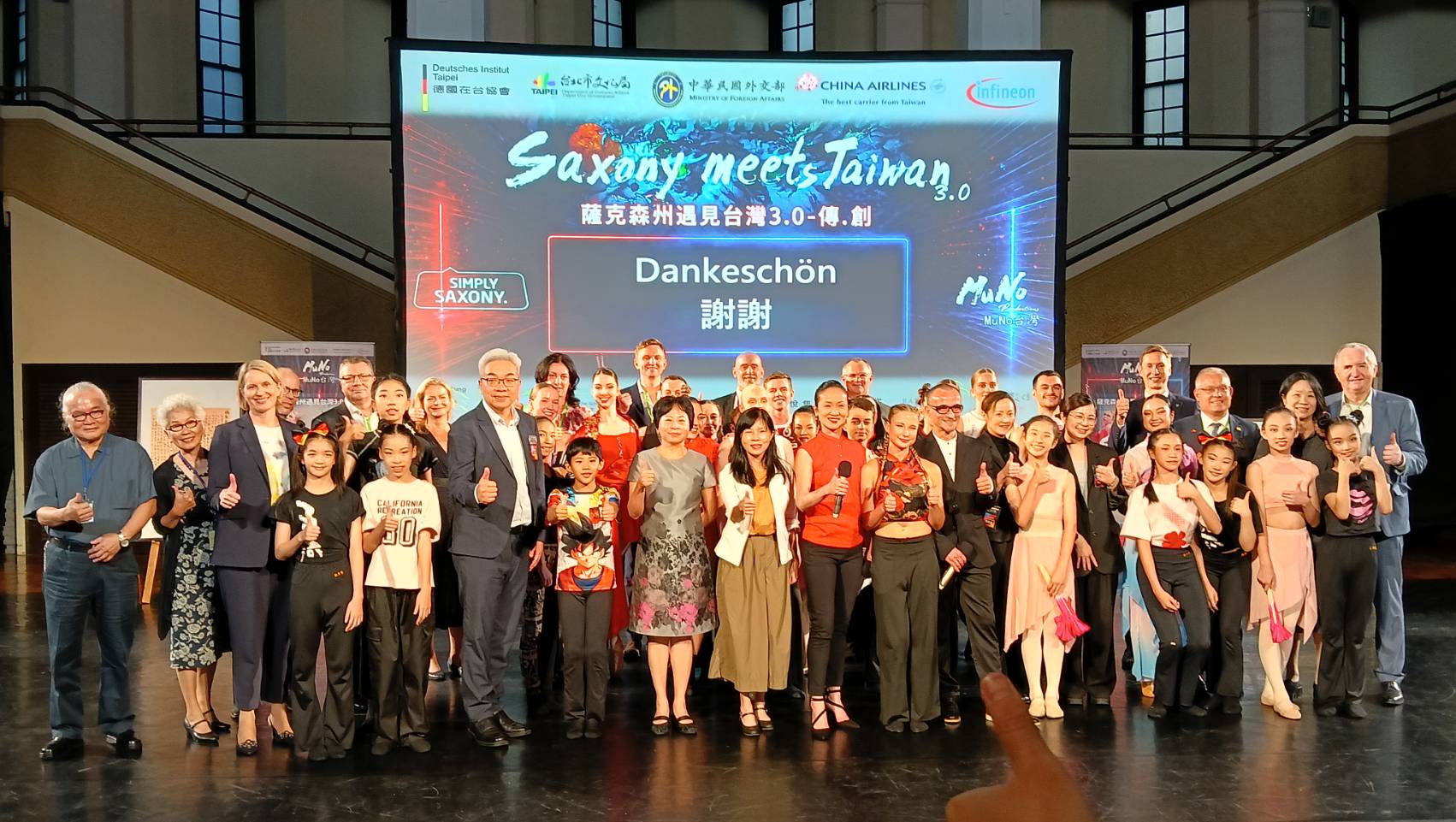
TAIPEI, 4 September 2026 — “Saxony Meets Taiwan 3.0 — Transmit, Create” (德國薩克森州遇見台灣 3.0《傳.創》) had its world premiere in the Zhongzheng Auditorium of Zhongshan Hall. MuNo Taiwan produced it with MuNo-Productions Germany. Taipei’s Department of Cultural Affairs and the German Institute Taipei were the co-organizers. The work is led by Taiwanese choreographer Mu-Yi Chen, who is based in Germany, and by German producer Norbert Kegel.
Dancers and young performers from Taiwan, Germany, and other countries share the stage, including children and teenagers. The vocabulary is ballet, contemporary dance, hip hop, wushu, tai chi, ink, digital animation, and large projection. Ink drawings by the Taiwanese artist Chen Mu-yu are turned into those projections. Chen Mu-yi said the piece leaves present-day Taiwan and meets martial arts, tai chi, and ink again, between the pace of the city, technology, and older culture. It then crosses to Saxony. Castles, the Elbe, and the history of those cities come on stage, including war, division, rebuilding, and freedom.
Chen Ching-kun, writing in Vigor Media on 6 September, split the night in two. The first part is built from Taiwanese signs: martial arts, tai chi, ink, a dragon in the digital images, and a China Airlines plane taking off across the large screen. The second part turns to Saxony. Dancers rise out of rubble. The words “thought is free” appear.
After Taipei, the listed nights were 27 September at the Saxony State Theater, 10 October at Meissen City Theater, and 31 October at Weinsberg City Theater, which Chinese reports call 魏因伯拉. As of 15 October, Weinsberg is the night still ahead.
Dirk Panter, Saxony’s minister for the economy, labor, energy, and climate protection, said the series keeps deepening the link, from chips and research to art, culture, and dance, and that lasting economic cooperation needs understanding and respect. Chen Yu-hsin, deputy director of Taipei’s Department of Cultural Affairs, said Zhongshan Hall holds an important piece of the city’s memory, and that sending the work on to Saxony shows culture crossing a border. Julie Chu, director-general of the Foreign Ministry’s European department, said the stage is where tradition meets the new, and East meets West.
Infineon Taiwan was the technology sponsor. Managing director Chen Chih-hao said the company has a long base in Taiwan, and that Dresden, in Saxony, is an important site for its research and factories. He said this support is the cultural side of a tie that already runs through semiconductors. The links on this story open the thirteen pages that carried the premiere, from Central News Agency and Economic Daily News to the Vigor column.